Laser Hair Removal, Built for UK Clinic Workflow
Buy a laser hair removal machine for salon use in the UK. Compare diode vs IPL, compliance, cost and workflow for a clinic opening in Great Britain.
You're opening a laser hair removal service, or adding it to an existing salon. You need to choose a laser hair removal machine for salon work that suits your client base, your premises and your budget. This guide follows the launch sequence: equipment, room safety, staffing, compliance, scheduling and client communication. It's written for Great Britain. Northern Ireland follows different rules, so check separately if that's where you trade.
Diode laser vs IPL: which machine fits your salon
Start with the technology. A diode laser emits a single 808nm wavelength that targets melanin in the hair follicle, with a cooled sapphire tip protecting the skin. That's why it's a workhorse for high-volume salons treating coarse or dark hair on Fitzpatrick skin types I to VI. An IPL machine is different. It's broad-spectrum, 430-1200nm, and you change filters to treat hair, pigmentation or redness. IPL suits a salon that wants one device for many treatments, but its hair results are less predictable than diode on darker skin or fine hair.
Your first action: check your client list from the last three months. If most bookings are legs and underarms, a diode like our diode laser hair removal machine will clear a slot faster. If you also want facial rejuvenation and vascular work, compare diode vs IPL before you spend.
Treatment room setup and laser safety in Great Britain
Laser hair removal equipment is a controlled area, not a normal beauty room. You must designate a room with restricted access, cover reflective surfaces, and put the right eyewear on every person present. The operator wears laser-specific goggles matched to the wavelength. The client wears goggles or opaque eye shields. The door needs a warning sign outside during treatment, and if the door opens onto a corridor, an interlock that cuts the beam when opened is the cleanest solution. Portable warning signs, by the way, are not enough on their own.
Your action: walk the room with a tape measure. The device needs space for the operator to move around the treatment couch on all sides. You need a mains socket within reach of the umbilical, and a route for waste towels that doesn't cross the laser path.
A risk assessment is not optional. Under the Management of Health and Safety at Work Regulations 1999, regulation 3, if you employ five or more staff you must record the significant findings in writing. That includes who could be harmed, what controls you have, and when you review it. Don't put this off. Your insurer will ask for it after an incident, and a written assessment is the first thing a council inspector asks to see.
Staffing, training and insurance: who can operate
There is no single national licence for laser hair removal in Great Britain. You must not assume a beautician can operate simply because they've used IPL before. Each person needs device-specific training from the supplier or an independent trainer, covering safety interlocks, skin typing, pulse settings and emergency procedures. Keep a training record. The Provision and Use of Work Equipment Regulations 1998 (PUWER) requires that equipment is maintained and that operators have adequate information, instruction and training.
Insurance is not the same as training. A standard beauty treatment policy may exclude laser or IPL unless it's declared and underwritten. Tell your broker exactly what you'll use and on whom. Some insurers require proof of training before cover starts, others ask for the written risk assessment. Get this in place before you treat your first paying client.
Your action: write a one-page competency checklist for each operator, and have them sign it after training. Keep it in the staff file. It's the single most useful document if anything goes wrong.
Compliance in Great Britain: registration, marking and local rules
The UK Medical Devices Regulations 2002 separate equipment by intended purpose. A machine that is declared by its manufacturer as having a medical purpose, such as permanent hair reduction, is a medical device. A machine intended only for cosmetic hair removal is not. The EU MDR Annex XVI lists some cosmetic devices, but the UK has not yet brought those into UK MDR 2002. So in Great Britain, a cosmetic-only laser hair removal machine may not need UKCA or CE marking as a medical device. But many machines on the market carry a CE mark under the transitional arrangements. That does not mean the device is automatically lawfully placed on the GB market. You need to check with the supplier.
Ask these seven questions before you buy. Which marking does the device carry, UKCA or CE? If CE, on what directive, and is that directive relevant to its intended purpose? Is the device registered with the MHRA? Who is the UK Responsible Person? Can you have a copy of the Declaration of Conformity? Does the supplier have a local service agent in Great Britain for warranty and spare parts? What happens if the device is reclassified during the MHRA reform of cosmetic devices? The transition periods are still moving. Check the MHRA guidance on the day you order, not the day you first read this page.
Local authority licensing is patchy. In London, many boroughs use the London Local Authorities Act 1991 to require a special treatment licence for certain skin-piercing or electrical treatments. Outside London, some councils have similar powers under local Acts or byelaws, but many do not regulate laser hair removal at all. The only reliable answer is a call or email to your own council's licensing team. Ask for the exact current requirement in writing. Don't assume a treatment room licence from a neighbouring borough transfers to yours.
Your action: create a supplier checklist with those seven questions, and send it to any vendor you're shortlisting. If they can't answer in writing, don't sign.
Scheduling and capacity: how many clients can you actually treat
Laser hair removal works across a course, not a session. Hair grows in cycles, so sessions are spaced by body area: face every four to six weeks, body every six to eight. A 12x12mm² spot moves across a full leg in about 15-20 minutes of laser time, but add consultation, prep, cooling and aftercare, and a leg slot is 30-40 minutes. Underarms can be done in 10-15 minutes. Build your diary on those slots, not on the laser's maximum repetition rate.
Your action: for the first month, open your diary with shorter blocks and longer gaps. Treat half your planned volume. This is not lost revenue. It's how you find your real room turnover while staff learn the machine and you build a photo record for before-and-after evidence.
Client communication: patch tests, expectations and skin of colour
Every client needs a patch test at least 48 hours before the first full treatment. It's not just a safety formality, it's your evidence that the skin tolerates the settings. Photograph the patch test site. For clients with Fitzpatrick skin type IV to VI, the risk of post-inflammatory hyperpigmentation (PIH) is higher. A study of 808nm diode hair reduction in Sudanese women with skin types IV-VI showed effective reduction with careful settings, but the article also emphasises the need for cautious fluence and cooling. That means you need to adjust your starting energy down, not just apply the same protocol as a pale-skinned client.
Tell clients the truth about permanence. Laser hair removal produces long-term reduction, not guaranteed removal forever. Some hair will return. Hormonal changes, pregnancy, certain medications can all restart growth. Don't use the word 'permanent' in marketing. In the UK, the Advertising Standards Authority's CAP Code requires that objective claims be backed by evidence. Your menu should promise reduction, not elimination, and you should document your own before-and-afters for every claim you make.
Your action: print a one-page consent form that includes the PIH risk for darker skin, the possibility of paradoxical regrowth, and the need for maintenance sessions. Get it signed at the patch test, and again before each course.
What does a diode laser hair removal machine cost to run in the UK
Think in pounds, not just the headline price. Your running costs include the machine itself, a service contract or spare parts buffer, replacement handpieces over several thousand shots, consumables like cooling gel and disposable covers, staff training, and insurance. Importing a machine from outside the UK adds VAT and possibly duty, plus the cost of a UK Responsible Person if you don't have one. We cover the landed cost process in our guide on laser hair removal machine price.
Your action: build a simple spreadsheet. One column for one-off costs, one for monthly. Do it for diode and IPL. Then work out your break-even number of legs per week at your local market rate. If that number is more than your room can book in a Tuesday afternoon, you need a cheaper machine or a different service mix.
While you decide, read our full buying guide for laser hair removal machines and the technical comparison of laser hair removal machines.
Frequently asked questions
Do I need a special treatment licence for laser hair removal in England?
Not everywhere. London boroughs often use the London Local Authorities Act 1991 to licence special treatments, which may include laser or IPL. Outside London, some councils have local Acts or byelaws, but many do not regulate it at all. Wales has a different regime under the Public Health (Wales) Act 2017, but that list only covers acupuncture, piercing, electrolysis and tattooing, not hair removal. The only reliable answer is to ask your own council's licensing team in writing.
Is a CE marked laser hair removal machine legal in Great Britain after Brexit?
It depends on the device's intended purpose and the current MHRA transitional arrangements. A machine declared as a medical device under the old EU directives may still be placed on the GB market under CE marking for a limited period. A machine intended only for cosmetic hair removal is not currently covered by UK MDR 2002, even if it carries a CE mark under another directive. Always ask the supplier for the declaration of conformity and MHRA registration status, and check MHRA guidance on the day you order.
How long should a laser hair removal appointment take?
That depends on the area. A diode laser with a 12x12mm² spot can treat a full leg in roughly 15-20 minutes of laser time, but the whole slot including consultation, prep and aftercare is usually 30-40 minutes. Underarms are 10-15 minutes. Diode is generally faster than IPL for the same area because the energy is concentrated at one wavelength and the repetition rate is higher.
What is the biggest safety risk for darker skin types?
Post-inflammatory hyperpigmentation (PIH). It's a darkening of the skin after the laser heats the melanin in both the hair and the epidermis. The risk is higher for Fitzpatrick skin types IV to VI. You reduce it by using conservative energy settings, longer pulse widths, effective cooling, and a patch test at least 48 hours before the first full treatment. Document the patch test response and adjust settings accordingly.
Machines for this solution
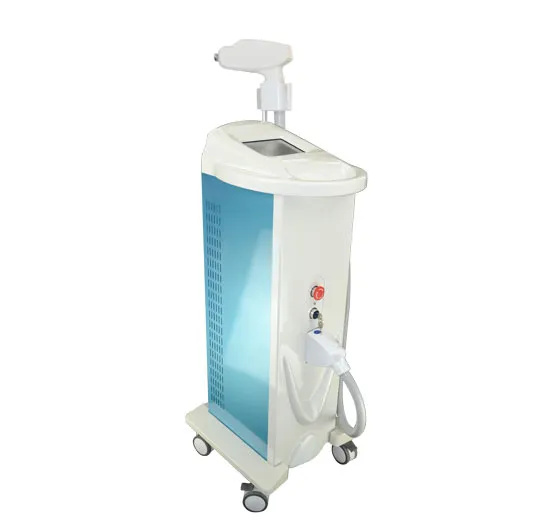 D01 / D02
Diode Laser Hair Removal Machine
808nm diode laser for high-volume hair reduction in UK salons. 0-4°C sapphire contact cooling, 12x12mm spot, course-based results across Fitzpatrick I–VI with patch testing on darker skin.
View machine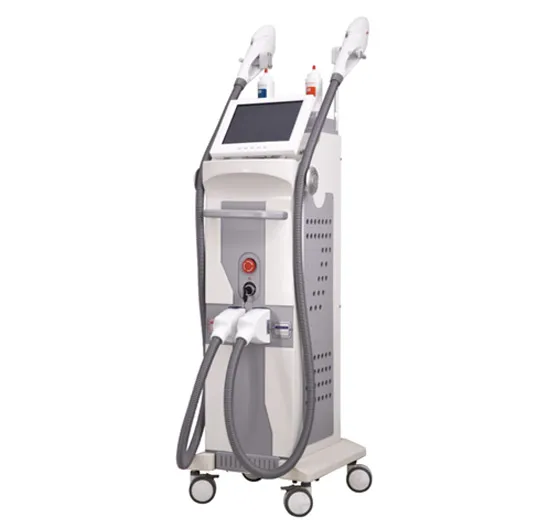 L01 / L02
OPT Laser Machine
Optimal Pulse Technology (OPT) square-wave pulses for painless hair removal plus skin rejuvenation, pigment and vascular treatment on one platform.
View machine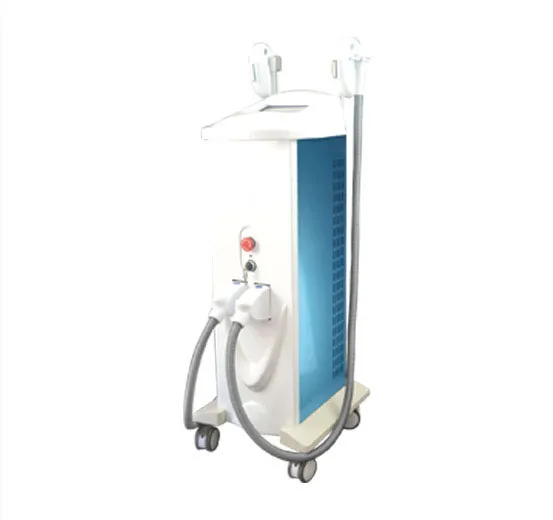 L01 / L02
IPL Machine
Intense Pulsed Light broad-spectrum device (430-1200nm) for hair removal, skin rejuvenation, pigmented and vascular lesion removal, and acne treatment.
View machineRelated searches
Get a quotation for this solution
Tell us your market and expected volume — factory pricing follows within 12-24 hours.